Spring in Canada sounds like relief after months of cold air, wind, indoor heating, and dry skin. But for sensitive, redness-prone skin, the shift from winter to spring can be its own kind of stressful. Your skin is still recovering from winter dehydration, while longer days, more time outside, temperature swings, pollen, and environmental stress can all leave your complexion feeling tight, reactive, or just a little off.
If your skin still feels dry, flushed, irritated, or easily overwhelmed, you are not alone. A good spring skincare routine is not about doing more. It is about helping your barrier recover, keeping your routine steady, and choosing products that support skin instead of pushing it too hard.
Below, we are breaking down how to transition your skincare routine from winter to spring in Canada, especially if your skin leans dry, sensitive, or redness-prone.
Why sensitive skin can still feel stressed in spring
Many people expect their skin to instantly improve once winter ends. In reality, spring can be a weird in-between season. Your barrier may still be depleted from months of cold weather, but now it also has to deal with changing humidity, more UV exposure, longer days outside, and the general unpredictability of Canadian weather.
If you spent the winter layering rich creams, taking hot showers, or staying in heavily heated indoor spaces, your skin may still be trying to rebuild moisture balance. That is why spring is often the moment when tightness, redness, rough patches, and sensitivity still linger, even if the temperature looks better on paper.
If this sounds familiar, start by looking at what helped you through winter. Our guide to winter skincare for sensitive skin covers the barrier-first habits that still matter during seasonal transition.
Signs your skin barrier is still damaged after winter
Not sure whether your skin is just dry or whether your barrier is still compromised? These are a few common signs:
- Skin feels tight shortly after cleansing
- You notice more visible redness than usual
- Your skin stings when you apply active products
- Dry patches keep coming back even when you moisturize
- Your complexion looks dull, rough, or uneven
- Your skin suddenly feels reactive to products that used to feel fine
When your barrier is not in great shape, the answer is usually not exfoliating harder or adding more actives. It is usually the opposite. A simpler routine with hydration, barrier support, and less friction is often the better move.
If you want a deeper breakdown of what barrier-supportive products should actually do, read our guide to the best barrier repair creams for sensitive skin.
How to transition your skincare routine from winter to spring
The goal is to lighten up only where needed, not to strip your routine down too quickly. Your skin may want a little less heaviness than it did in January, but it still needs support.
1. Keep your cleanser gentle
Spring is not your cue to suddenly switch to a foaming cleanser that leaves your skin squeaky clean. If your skin is sensitive, keep using a gentle, non-stripping cleanser that leaves skin comfortable after rinsing.
If your face feels dry before you even apply the rest of your routine, your cleanser may still be too harsh.
2. Focus on hydration and barrier support
This is still the season for ingredients like glycerin, panthenol, ceramides, squalane, and soothing plant extracts. The best spring skincare routine for sensitive skin is usually one that helps skin hold onto water while staying calm.
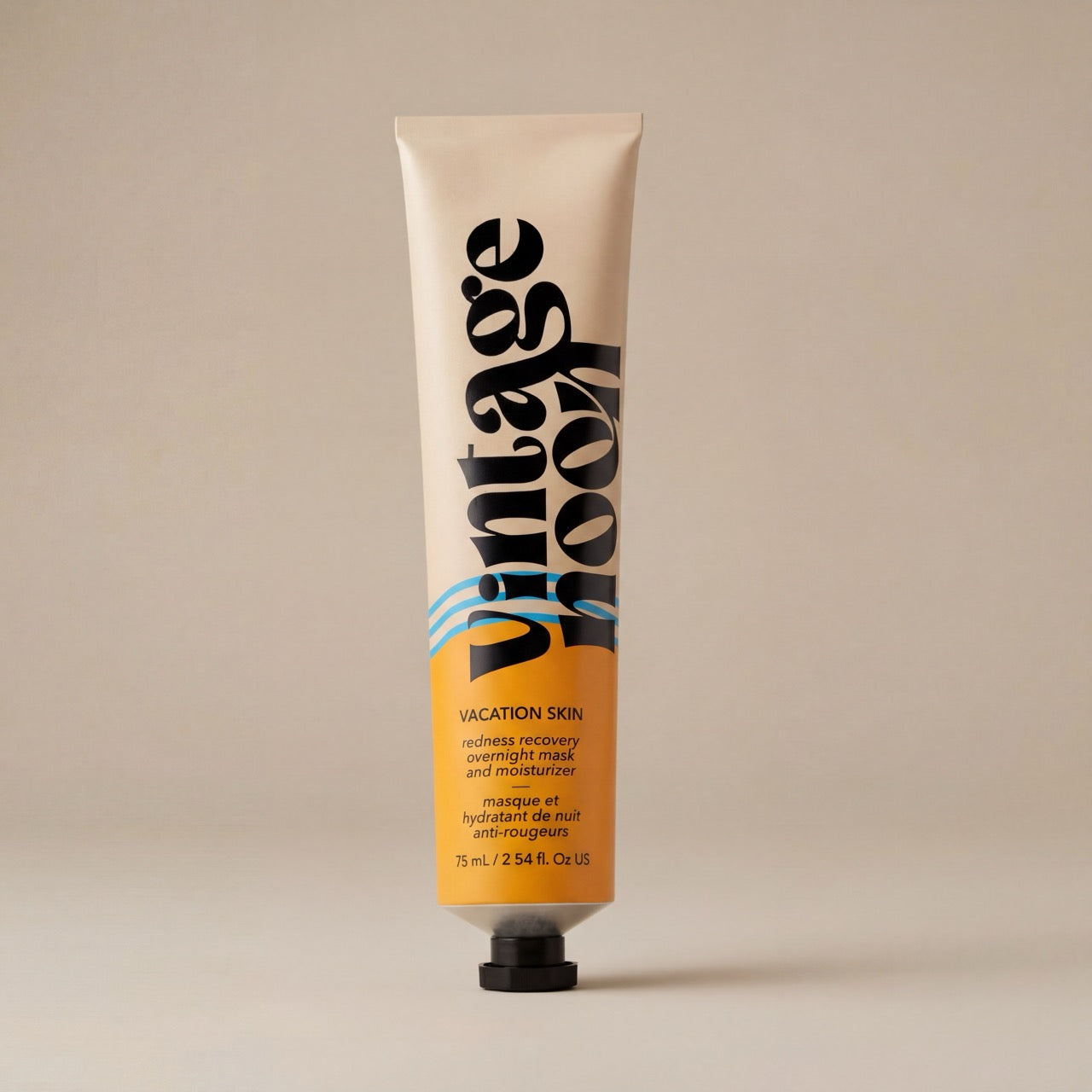
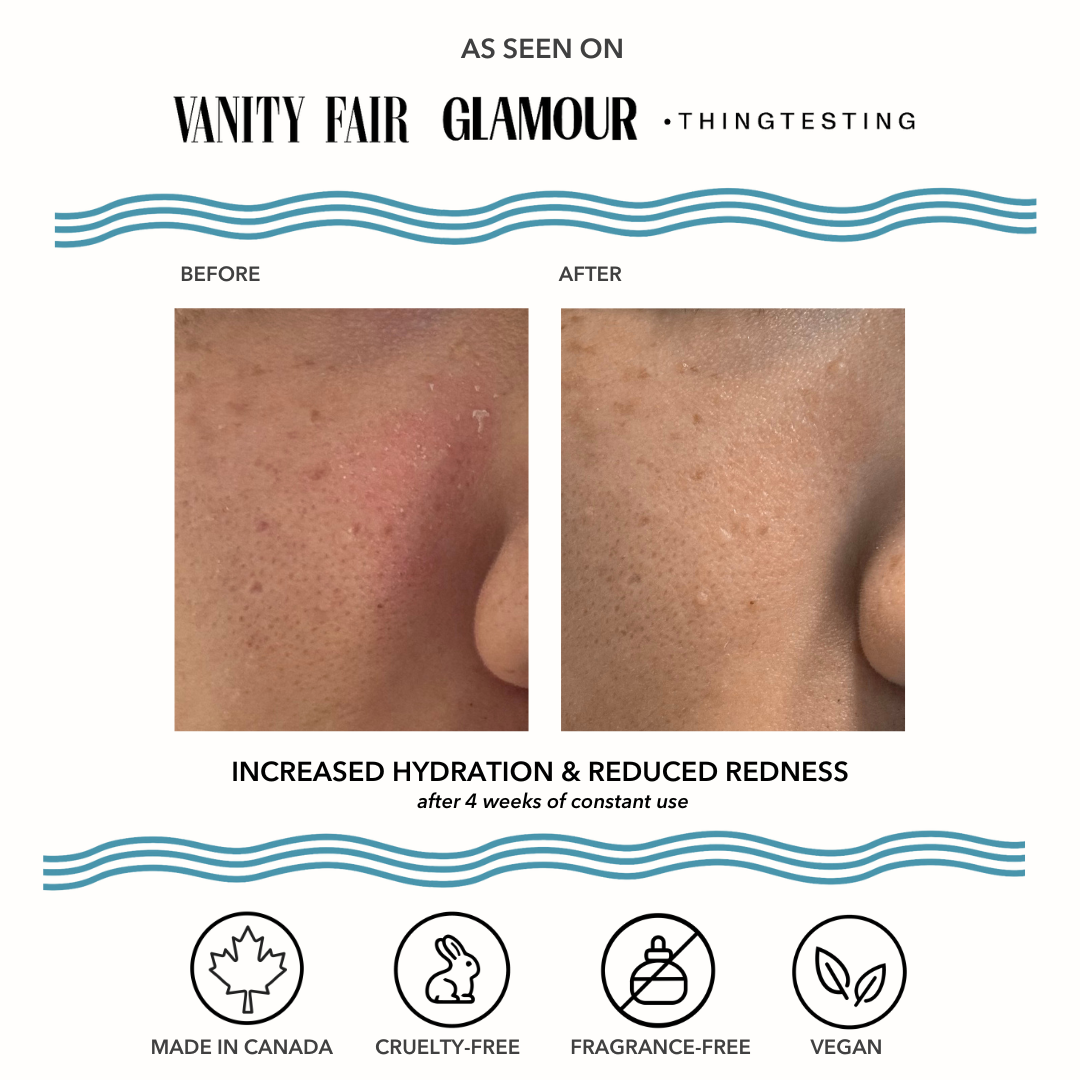
That is exactly why Vacation Skin Redness Recovery Overnight Mask and Moisturizer works so well in this seasonal window. It gives you the comfort of a richer treatment at night, but can also be used as a daily moisturizer when your skin needs a little extra support. With Centella Asiatica, Calendula, Panthenol, Ceramide NP, Shea Butter, and Squalane, it is built for skin that feels stressed, dehydrated, or visibly red.
3. Do not rush back into strong actives
It is tempting to use spring as the moment to restart every exfoliant or retinoid you paused over winter. Try not to do everything at once. If your skin is still feeling fragile, keep exfoliation minimal and reintroduce stronger actives gradually.
A good rule is this: if your skin still feels stingy, tight, or reactive, prioritize recovery first.
4. Wear SPF every day
Even if it still feels cool outside, spring sun exposure is real. Daily sunscreen matters, especially if your skin is already prone to redness or you are using any active ingredients in your routine.
Think of barrier care and sun protection as a pair. One helps support recovery, the other helps prevent your skin from getting more irritated in the first place.
5. Simplify before you optimize
If your skin has been all over the place lately, this is not the season for a 10-step routine. Instead, build around a few consistent essentials:
- A gentle cleanser
- A hydrating serum or essence, if you use one
- A barrier-supportive moisturizer
- Broad-spectrum sunscreen
- An overnight treatment or richer moisturizer for nights when your skin needs more comfort
What ingredients to look for in spring if you have sensitive skin
Spring skincare in Canada should still be rooted in ingredients that support the skin barrier, especially if you deal with dryness, redness, or visible irritation.
Ceramides
Ceramides help support the skin barrier and reduce the feeling of dryness and tightness. They are especially helpful when skin feels depleted after winter.
Panthenol
Also known as vitamin B5, panthenol is a great ingredient for keeping skin feeling soft, hydrated, and comfortable.
Centella Asiatica
If your skin tends to look flushed or easily irritated, Centella Asiatica is one of the best ingredients to keep in your routine. It is a key reason people often search for a cica sleeping mask for sensitive skin.
Calendula
Calendula is often loved in routines designed for skin that feels delicate, dry, or out of balance.
Squalane and shea butter
These help nourish skin and reduce that uncomfortable, stretched feeling that can linger after winter, especially on cheeks and around the nose.
If redness is your main concern, you may also like our guide to the best moisturizer for redness.
What to avoid if your skin is feeling reactive
Spring skincare is just as much about what you avoid as what you add. If your skin has been temperamental lately, try pulling back on the usual triggers.
- Over-exfoliating with acids or scrubs
- Switching products too often
- Highly fragranced skincare
- Harsh foaming cleansers
- Using too many active ingredients at the same time
- Skipping moisturizer because the weather feels warmer
Sensitive skin usually responds best to consistency. A calm routine may not feel exciting, but it often delivers better results than a trendy one.
A simple spring skincare routine for dry, sensitive skin
Morning
- Cleanse gently, or rinse with lukewarm water if your skin feels balanced
- Apply a hydrating serum if needed
- Use a barrier-supportive moisturizer
- Finish with sunscreen
Night
- Cleanse gently
- Apply your treatment step only if your skin can comfortably tolerate it
- Use a richer moisturizer or overnight mask to replenish moisture overnight
If your skin is extra dry, stressed, or visibly red, apply a generous layer of Vacation Skin as your final nighttime step. If you want something more flexible, use a thinner layer as your everyday moisturizer morning and night.
Why a Canadian-made skincare routine makes sense for this season
There is a reason so much made in Canada skincare naturally leans into hydration, comfort, and barrier support. Canadian weather asks a lot of skin. Seasonal transitions are sharp, indoor environments can be drying, and spring does not always arrive gently.
That is also why Canadian skincare brands that put skin first often feel especially relevant for people with sensitive skin. They tend to prioritize formulas that help skin feel resilient, comfortable, and supported instead of overloaded.
Final thoughts
The best spring skincare routine for sensitive skin in Canada is not about chasing a completely new routine. It is about helping your skin recover from winter, protecting it from the next round of seasonal stress, and keeping your barrier strong enough to handle change.
If your skin still feels dry, reactive, or visibly red, start simple. Use fewer products. Choose barrier-supportive ingredients. Keep your routine steady. Then give your skin time to catch up.
If you are looking for one product to anchor that transition, shop Vacation Skin Redness Recovery Overnight Mask and Moisturizer. It is a fragrance-free, made-in-Canada formula designed to calm the appearance of redness, support the moisture barrier, and help stressed skin feel comfortable again.
For more reads on sensitive skin, you can also explore: